A fine art photography pricing guide equips visual artists, printmakers, and landscape photographers with structured valuation formulas, edition limits, gallery consignment margins, and archival production markups. Valuing fine art requires balancing tangible material fabrication costs with intangible market demand, artistic reputation, technical scarcity, and gallery representation standards.
Pricing fine art imagery presents unique challenges compared to commercial client assignments. Commercial shooters charge for creative labor hours and copyright usage licenses, whereas fine art photographers produce physical tangible artworks intended for private collectors, corporate interior designers, and commercial art galleries. Pricing pieces too cheaply devalues the artwork in the eyes of serious collectors, while inflated prices impede initial sales traction and alienate regional patrons.
Establishing consistent pricing frameworks protects your artistic credibility across galleries, personal studio exhibitions, and online art sales. Consulting our primary photography pricing guide ensures your overall business model maintains financial viability while you cultivate high-end collector relationships.
Foundational Production Costs in Fine Art Printmaking
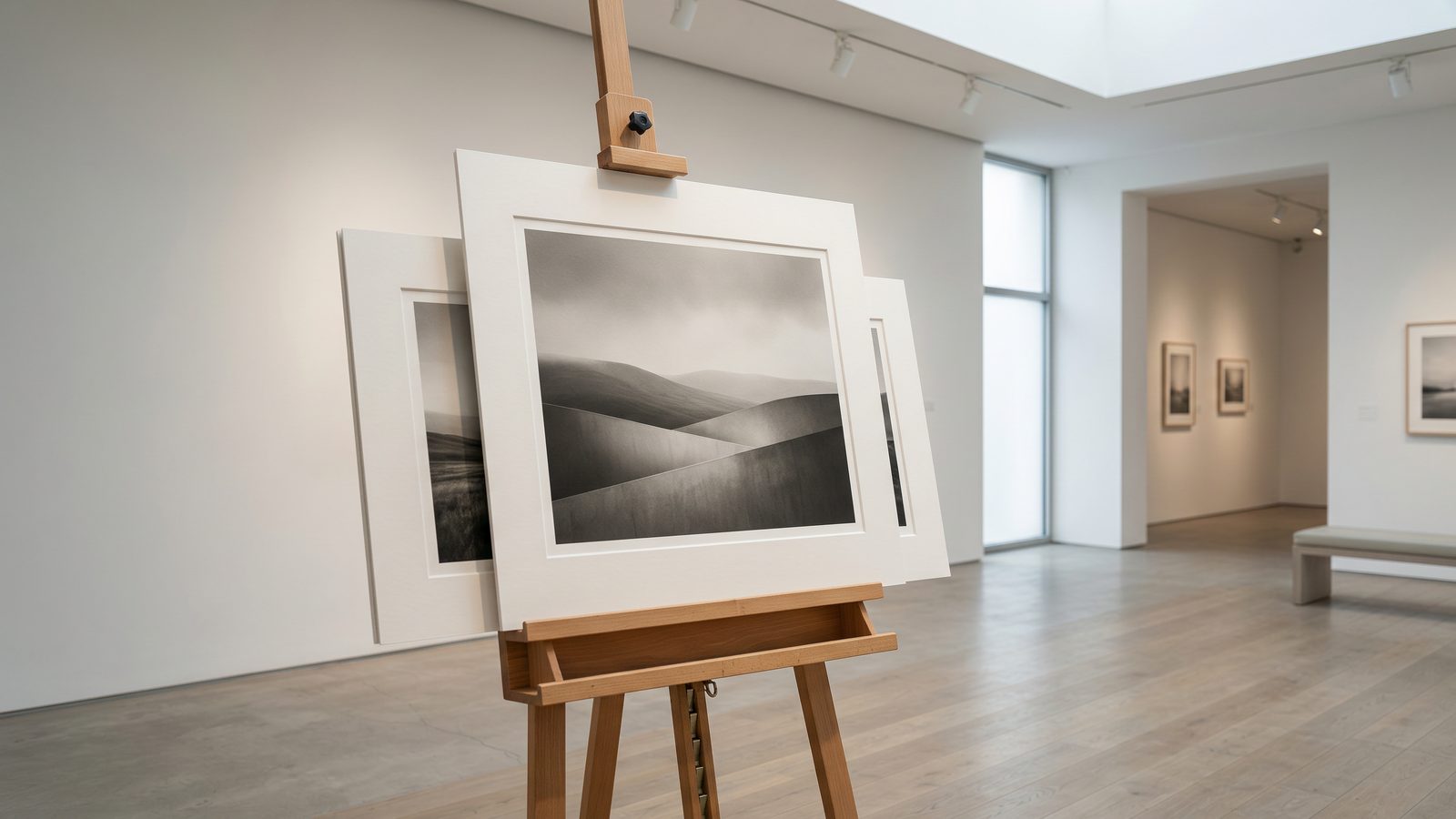
Accurate artwork pricing begins with determining direct physical production expenses. Archival pigment printmaking—commonly called giclée printing—utilizes specialized aqueous pigment ink sets and heavy cotton rag papers. Premium papers, such as 100% cotton fiber baryta or textured mould-made rag, ensure museum-grade longevity and resistance to ultraviolet fading over decades.
Photographers producing their own prints incur substantial initial capital expenditures for wide-format pigment printers, colorimeter calibration probes, and color-accurate monitors. Those working with professional custom print labs must account for base printing costs, proofing test strips, precision trimming, and protective acid-free glassine interleaving. Tracking wholesale fabrication costs ensures baseline print pricing never falls below cost-recovery thresholds.
Managing ongoing art business overhead aligns with financial management best practices outlined in the Small Business Administration business financial management guide. Separating direct materials costs from studio occupancy overhead allows artists to project true gross profit margins on physical print sales accurately.
Time spent on image mastering also constitutes a direct cost. Fine art images often require hours of digital darkroom work to clean dust spots, perform dodge and burn refinements, and manage tonal profiles for specific paper substrates. Incorporating creative mastering hours into initial print prices guarantees fair compensation for artistic labor.
Open Editions Versus Limited Edition Print Valuations
Fine art photographs are sold either as open editions or limited editions. Open edition prints are produced indefinitely without any predetermined restriction on print volume. Because supply remains theoretically unlimited, open editions command lower retail price points, making them accessible to casual art buyers, interior decorators, and retail gift shoppers. Open editions typically sell from fifty to two hundred fifty dollars depending on print dimensions.
Conversely, limited edition prints carry a binding contractual limit on total reproduction numbers across specific size categories. Scarcity drives collectible value; once an edition of twenty-five or fifty prints sells out, no additional copies can ever be produced. Consequently, limited edition prints command substantially higher retail investments, ranging from several hundred to thousands of dollars per print.
| Artwork Format | Dimensions | Edition Limit | Typical Retail Range |
|---|---|---|---|
| Open Edition Small Print | 8×10 to 11×14 Inches | Unlimited | $45 to $120 |
| Open Edition Mid-Size Print | 16×20 to 16×24 Inches | Unlimited | $150 to $325 |
| Limited Edition Collector Print | 20×30 to 24×36 Inches | 25 to 50 Prints | $450 to $1,200 |
| Large Monumental Exhibition Piece | 40×60 Inches or Larger | 5 to 10 Prints | $2,000 to $6,500+ |
Determining How to Price Art Photography Editions
When structuring limited editions, implement a tiered escalation pricing strategy. Divide an edition of twenty-five prints into tiers: sell the first ten prints at baseline prices to generate initial collector interest, increase the price by thirty to fifty percent for prints eleven through twenty, and reserve the final five prints at double the initial price point as remaining availability dwindles. Reviewing our comprehensive breakdown of how to price photography prints provides practical formulas for setting multiplier targets across diverse edition sizes.
Gallery Consignment Fees and How to Price Photography for a Gallery
Commercial art galleries typically operate on a fifty-fifty consignment model, retaining half of the gross retail sales price to cover gallery exhibition overhead, opening receptions, collector marketing, and sales staff commissions. When pricing work for gallery display, calculate your retail price such that your fifty-percent artist payout comfortably covers print production, framing, studio overhead, and healthy profit margins. Never undercut gallery retail prices in your private studio or personal web shop, as price inconsistency destroys gallery relationships.
Framing Archival Materials and Presentation Markup Formulas
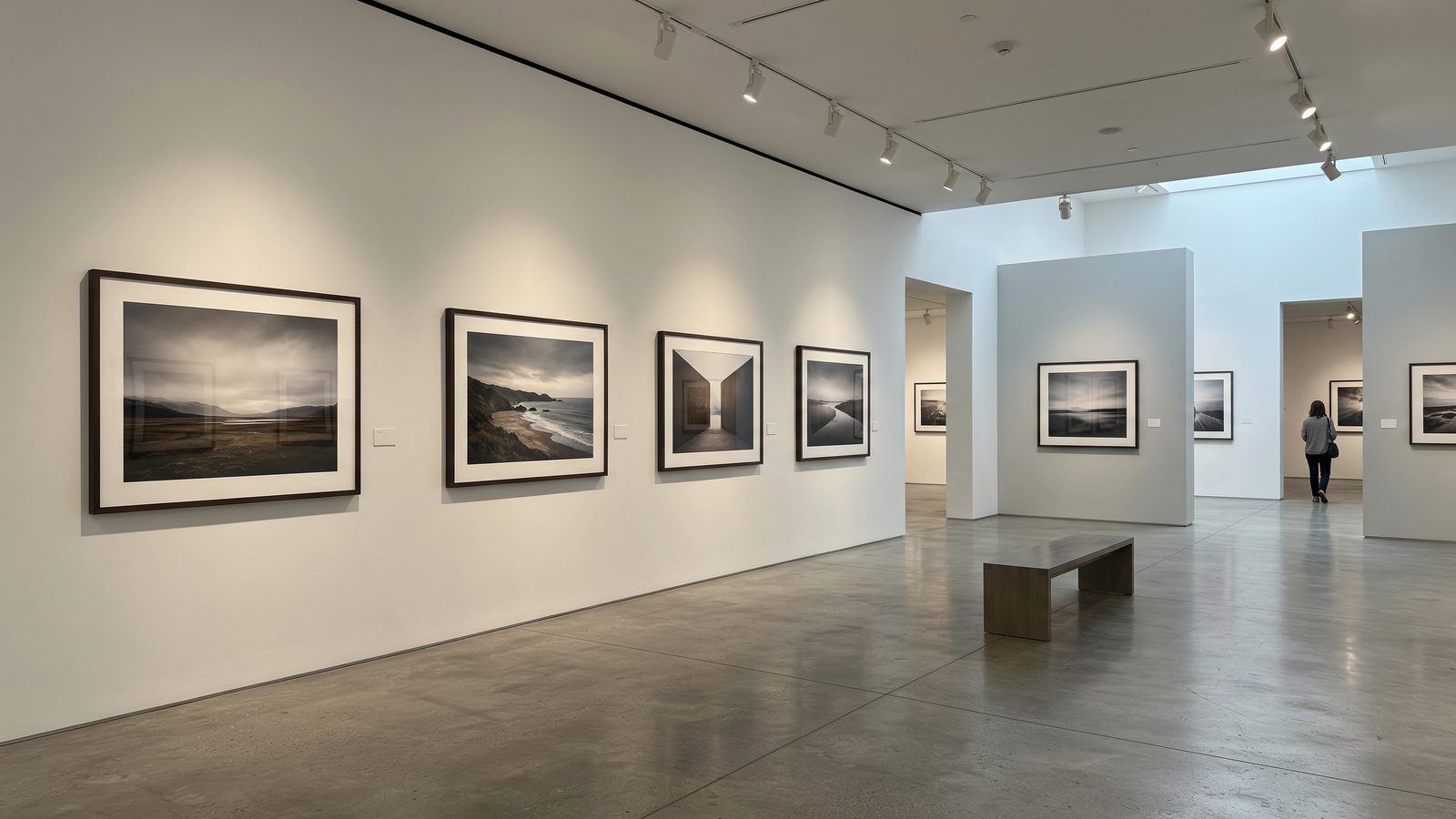
Offering finished framed artwork significantly increases gross revenue per transaction. Collectors frequently prefer purchasing ready-to-hang pieces that eliminate the hassle of independent framing consultations. However, archival custom framing requires museum-grade materials, including acid-free 8-ply mat boards, archival mounting corners, and non-reflective museum glass with 99% ultraviolet filtration.
Because custom framing involves upfront out-of-pocket expenses, apply a minimum markup multiplier of two to two-and-a-half times wholesale framing costs. If an archival hardwood frame, conservation mat, and museum glass cost you two hundred dollars at wholesale rates, add four hundred to five hundred dollars to the unframed print retail price.
Calculating How to Price Framed Photography Installations
Ensure that framed presentations incorporate heavy-duty hanging hardware, coated stainless steel hanging wire, and felt protective wall bumpers. When dealing with large-format corporate collections or hospitality installations, itemize professional delivery, crate packaging, and installation hardware fees separately to maintain project profitability. Reviewing our analysis on commercial photography price structures assists when quoting large architectural and corporate art commissions.
Establishing Market Reputation and Collector Relationships
Fine art valuation remains inextricably linked to artist pedigree and market recognition. Participation in juried museum exhibitions, prestigious art fair showcases, editorial features in reputable art publications, and inclusion in recognized private collections validate higher price thresholds. As your exhibition history expands, increase retail rates moderately—typically ten to fifteen percent annually—rather than executing erratic, massive price hikes that discourage repeat collectors.
Cultivating direct collector relationships through open studio events, collector preview newsletters, and private gallery walkthroughs drives sustained secondary sales. Providing exceptional white-glove customer service, archival packaging, and personalized handwritten notes with each shipment encourages collector loyalty across decades.
Legal Protections and Certificates of Authenticity
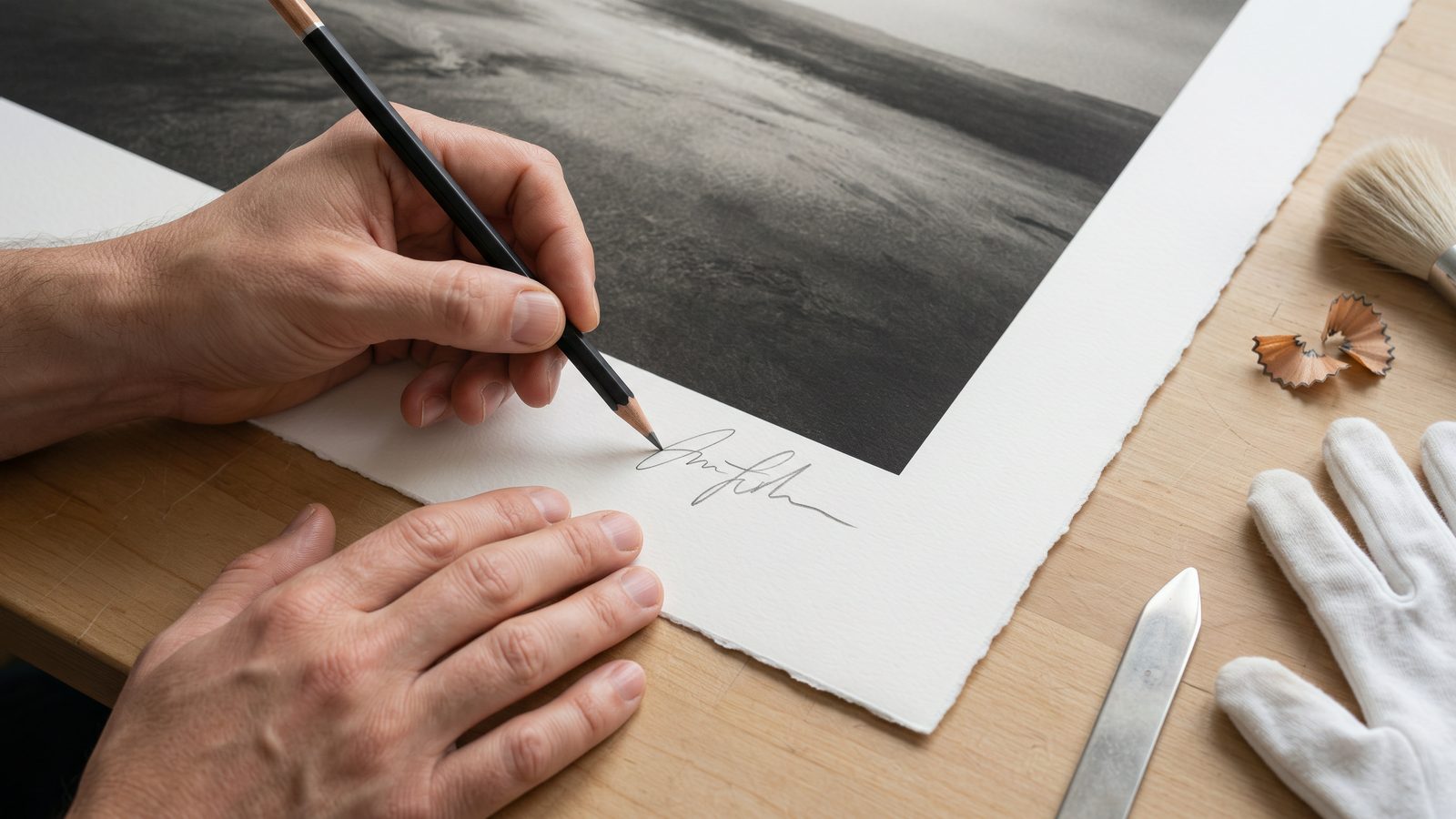
Every limited edition fine art photograph should be accompanied by a formal Certificate of Authenticity. The certificate must document the artist’s name, print title, date of creation, exact print date, print edition number, paper and ink specifications, and the artist’s original ink signature. Certificates reassure collectors regarding artwork provenance and prevent illicit counterfeit reproductions.
Fine art photographers should also secure statutory copyright protection for their portfolio catalogs by registering visual works with the federal government. Following official procedures through the U.S. Copyright Office registration portal for visual artworks ensures statutory damage remedies in the event of unauthorized commercial reproduction or digital copyright infringement.
Adhering to the principles in this fine art photography pricing guide enables printmakers to establish respected market rates, maintain fruitful gallery alliances, and build a lasting artistic legacy.
Frequently Asked Questions
How should fine art artists calculate wholesale versus retail gallery prices?
Retail prices for fine art photography must account for the standard 50% commission retained by commercial galleries. Artists calculate their retail price by doubling their desired net payout, ensuring that their 50% wholesale share covers all framing, printing, and studio profit margins.
What multiplier formula is standard for archival framing and printing markups?
The standard multiplier for archival printing and custom framing ranges from 2x to 3x wholesale costs for framing, and 3x to 5x for raw print production. These markups cover print proofing time, material handling risks, studio overhead, and custom packaging supplies.
Why do limited edition print runs command higher prices than open editions?
Limited edition prints command higher prices because production is capped at a predetermined number, creating verifiable market scarcity. As an edition nears sellout status, remaining available prints naturally appreciate in value for serious fine art collectors.
How does copyright protection apply when selling physical fine art prints?
Selling a physical fine art print transfers physical ownership of the tangible object, but the artist retains all underlying copyright and reproduction rights. Collectors may not legally scan, duplicate, or commercially exploit the image without an explicit written license from the photographer.