An architectural photography pricing guide provides the practical fee structures, licensing rules, and day rate formulas required to quote commercial buildings and residential projects profitably. Professional architectural photographers typically charge between one thousand two hundred dollars and three thousand five hundred dollars for a full day shoot, depending on regional market demand, property scale, and required deliverable counts. Understanding how to quote these specialized commissions ensures that your studio covers intensive equipment costs, extensive editing hours, and valuable commercial usage rights.
Unlike standard consumer portrait sessions, photographing built environments serves business clients such as architects, interior designers, general contractors, engineering firms, and luxury real estate developers. These clients utilize your imagery across national advertising campaigns, trade publication editorial submissions, award applications, and corporate portfolio websites. Consulting a reliable photography pricing guide helps you transition from informal rate estimates to standardized corporate proposals that institutional clients expect.
Working in the architectural sector also requires specialized perspective-control optics, precision gear heads, and advanced post-processing techniques such as exposure blending and perspective correction. Because each finished architectural image often demands thirty to sixty minutes of meticulous retouching, understanding your true operational costs is vital to long-term profitability. You can explore baseline creative pricing models in our guide on commercial photography price structures.
In this guide, you will explore standard day rate benchmarks, understand how to calculate per-image licensing fees, navigate multi-party cost-sharing agreements, and implement clear contract terms that protect your intellectual property.
Core Architectural Fee Models for Built Environments
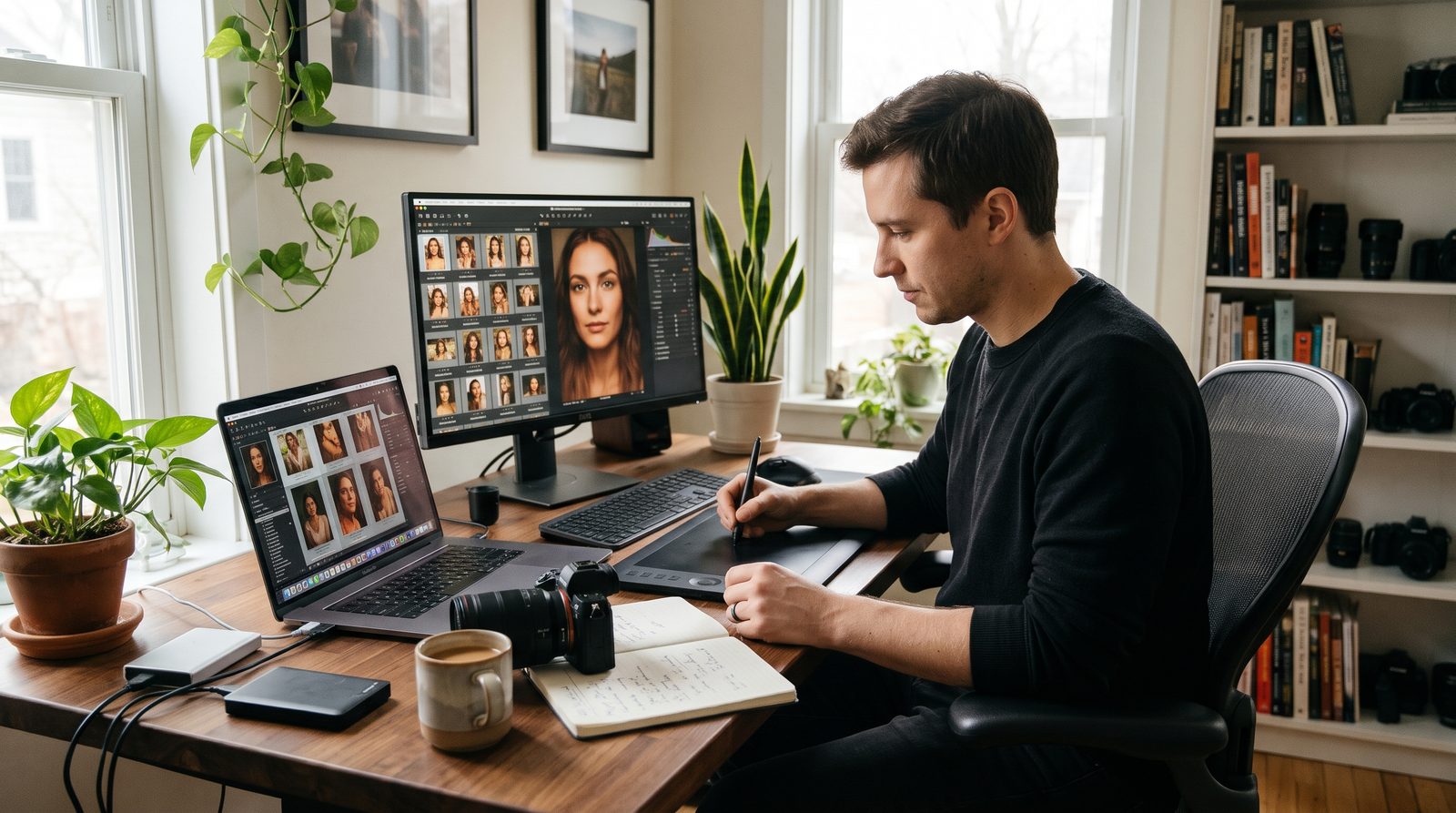
Pricing architectural photography generally relies on two primary components: the creative production fee and the image licensing fee. The creative fee covers the photographer time, equipment usage, technical expertise, on-site staging, assistant labor, and basic digital processing. The licensing fee grants the client legal permission to publish and distribute the resulting photographs across specified media channels for an agreed duration.
Many commercial photographers combine these elements into an all-inclusive creative day rate for standard marketing projects, while others itemize production and licensing separately on client estimates. Itemizing fees provides transparency for commercial clients who must justify creative expenditures to internal accounting departments or project developers. It also establishes a clear baseline when clients request additional usage rights or image files later.
When preparing initial estimates, you must account for non-shooting days dedicated to site scouting, weather monitoring, lighting planning, and client meetings. A project requiring a single day of principal photography frequently demands two full days of administrative preparation and digital post-production. You can review foundational rate calculation strategies in our tutorial on how to price photography sustainably.
According to business planning guidelines from the U.S. Small Business Administration finance guide, maintaining clear itemized billing structures helps small enterprises manage cash flow, project seasonal revenue, and build dependable working capital.
Estimating On-Site Production Hours
A typical full-day architectural shoot spans eight to ten hours on site, allowing the photographer to capture the structure under varying natural lighting conditions from sunrise through evening twilight. Exterior shots often require waiting for specific solar angles to highlight facade textures, while interior compositions demand careful balancing of ambient window light with supplemental strobes.
Half-day rates are generally billed at sixty to seventy-five percent of the full-day rate rather than an exact fifty percent division. A half-day session still consumes travel time, gear preparation, and shoot scheduling that prevents booking another client on the same calendar date.
Commercial Photography Day Rates and Production Charges
National benchmarks for commercial architectural photography vary by regional market tier and photographer experience. In secondary and tertiary metropolitan markets, emerging architectural photographers charge between one thousand and one thousand eight hundred dollars per shoot day. In major urban centers such as New York, Los Angeles, and Chicago, established architectural specialists command day rates ranging from two thousand five hundred dollars to five thousand dollars or more.
In addition to the primary day rate, estimates should outline standard production charges such as assistant fees, location scouting stipends, mileage reimbursements, and equipment rental fees for specialized tilt-shift lenses or high-output mobile power generators. Itemizing these operational costs ensures that unforeseen shoot requirements do not erode your creative earnings.
Deducting legitimate business expenses, including travel, gear depreciation, and assistant compensation, is supported by guidelines outlined in the Internal Revenue Service business expense guide. Tracking all project-related expenditures ensures compliant tax accounting and accurate calculation of net profit margins.
Client estimates should explicitly state how many finished retouched images the day rate includes. Standard architectural packages typically deliver eight to fifteen finished views per full day. Promising excessive image counts compromises artistic quality and leads to uncompensated editing marathons in post-production.
Licensing Rights and Cost-Sharing Agreements
Understanding copyright law and commercial usage licensing is fundamental to running an architectural photography business. Photographers automatically retain federal copyright ownership over every image they capture from the moment of creation, as affirmed by federal resources at the U.S. Copyright Office photographers portal. Clients do not buy the photos themselves; rather, they purchase a limited usage license defining how, where, and how long the images may be displayed.
Standard architectural licensing grants the commissioning party non-exclusive rights to use the images for their own company marketing, including website portfolios, social media profiles, print brochures, and industry award submissions. Editorial publication in architectural magazines is commonly permitted without additional fees, provided proper photographer photo credit is printed alongside each image.
Third-party usage requires separate licensing. If a window manufacturer, lighting supplier, or flooring contractor requests copies of your photographs to promote their products, they must execute an independent licensing agreement and pay a usage fee directly to your studio.
Structuring Client Usage Licenses
A standard commercial license should define the distribution territory, duration, and authorized media types. Regional commercial licenses typically specify local marketing use for two to five years. If a corporate client requires unlimited perpetual worldwide usage or television broadcast distribution, the licensing fee should scale accordingly to reflect that broad commercial exposure.
Managing Multi-Party Cost Sharing
Cost sharing is a standard industry practice where multiple project stakeholders collaborate to fund a single photo shoot. For example, the project architect, general contractor, structural engineer, and interior designer might agree to split production expenses. In a typical cost-sharing model, each additional party pays an extra twenty to thirty percent fee on top of the base creative fee, and the total cost is divided equally among all participants.
This structure provides tremendous value to clients by reducing their individual investment while allowing the photographer to earn significantly higher total revenue for a single day of shooting. Every participating party receives their own non-exclusive marketing license upon payment.
Architectural Photography Rate Comparison Table
The following table outlines standard fee ranges, deliverable expectations, and typical licensing terms across common commercial architectural project tiers.
| Project Tier | Day Rate Range | Typical Deliverables | Standard Licensing Scope | Target Client Type |
|---|---|---|---|---|
| Emerging Commercial | $1,000 – $1,600 | 6 – 10 finished images | Local web and portfolio use, 2 years | Local residential remodelers, small builders |
| Mid-Level Professional | $1,800 – $2,800 | 10 – 15 finished images | Regional marketing and award submissions, 5 years | Boutique architecture studios, interior designers |
| Established Commercial | $3,000 – $4,500+ | 12 – 20 finished images | National advertising and corporate publications | National architectural firms, commercial developers |
| Twilight Add-On Session | $400 – $750 | 2 – 4 finished images | Included in primary commercial license scope | Commercial hospitality, luxury estates |
When quoting architectural projects, evaluate the client market position and intended distribution scope before finalizing your proposal. For residential projects aimed at local MLS listings, compare your rates with our comprehensive guide on real estate photography pricing models.
Post-Production Expenses and Camera Gear Pricing
Architectural post-production demands specialized retouching skills that far exceed conventional color grading. Each composition frequently requires blending multiple exposures to tame harsh sunlight, removing distracting fire alarms and electrical switches, straightening vertical lines, and color-correcting mixed interior lighting sources. Most commercial shooters bill advanced retouching at seventy-five to one hundred fifty dollars per image beyond standard proofing.
Equipment investments in this specialty are substantial. A reliable commercial kit includes high-resolution camera bodies, specialized perspective-control tilt-shift lenses (such as 17mm, 24mm, and 50mm focal lengths), geared tripod heads for millimeter-precise leveling, heavy-duty carbon fiber tripods, and portable wireless strobes with light-shaping modifiers. Factoring gear depreciation into your annual cost of doing business ensures that your rates generate sufficient reserve capital for equipment replacements.
Mastering the principles of an architectural photography pricing guide allows you to present commanding proposals, protect your commercial copyright, and build enduring relationships with top design and construction firms throughout your region.
Frequently Asked Questions
What is the typical day rate for an architectural photographer?
National architectural day rates typically range from one thousand two hundred dollars to three thousand five hundred dollars depending on location and experience. Established photographers in major metropolitan centers often command four thousand dollars or more for complex commercial projects. The day rate covers on-site photography, technical equipment, and standard project preparation.
How does cost sharing work in architectural shoots?
Cost sharing allows multiple project stakeholders such as the architect, builder, and interior designer to split shoot expenses. Each additional party pays a supplemental percentage of the base creative fee, typically twenty to thirty percent, and the total cost is divided equally among all partners. Each participant receives an independent commercial usage license for their marketing needs.
Why do architectural photographers charge licensing fees?
Photographers retain federal copyright ownership of their images and grant clients legal permission to display them through usage licenses. Licensing fees ensure that commercial clients pay proportional value based on how widely the images are distributed across advertising campaigns, websites, and publications. Third parties who did not fund the shoot must purchase separate licenses to use the assets.
What equipment is required for professional architectural work?
Professional architectural photography requires high-resolution camera bodies paired with perspective-control tilt-shift lenses to prevent converging vertical lines. Photographers also depend on geared tripod heads, heavy-duty carbon fiber tripods, and wireless lighting modifiers to balance ambient interior illumination. Maintaining this specialized gear represents a significant operational expense reflected in commercial pricing.